

Introduction
My name is Jared Zhang, and I make NFL Draft content that I post on X, Substack, and TikTok. I am covering the New York Giant’s 2026 NFL Draft Class as a part of r/NFL_Draft’s Defending the Draft series. While I am mainly a Lions fan, I like to cover different teams to learn more about the different draft philosphies and roster constructions across the NFL (plus I couldn’t get Detroit last year lol). Let’s get started by talking about what went right and wrong in 2025 for Big Blue.
The 2025 Season: What Went Right
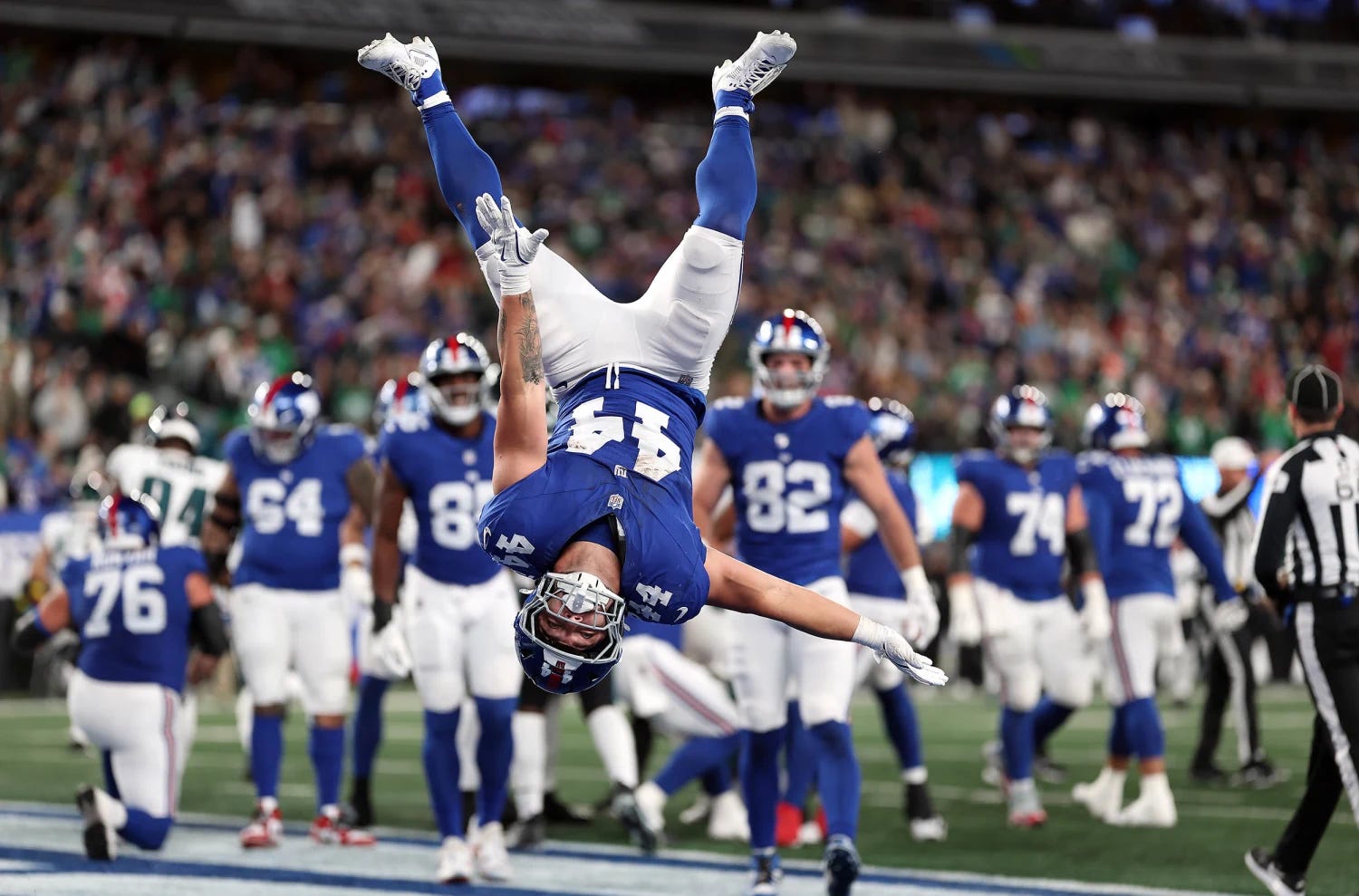
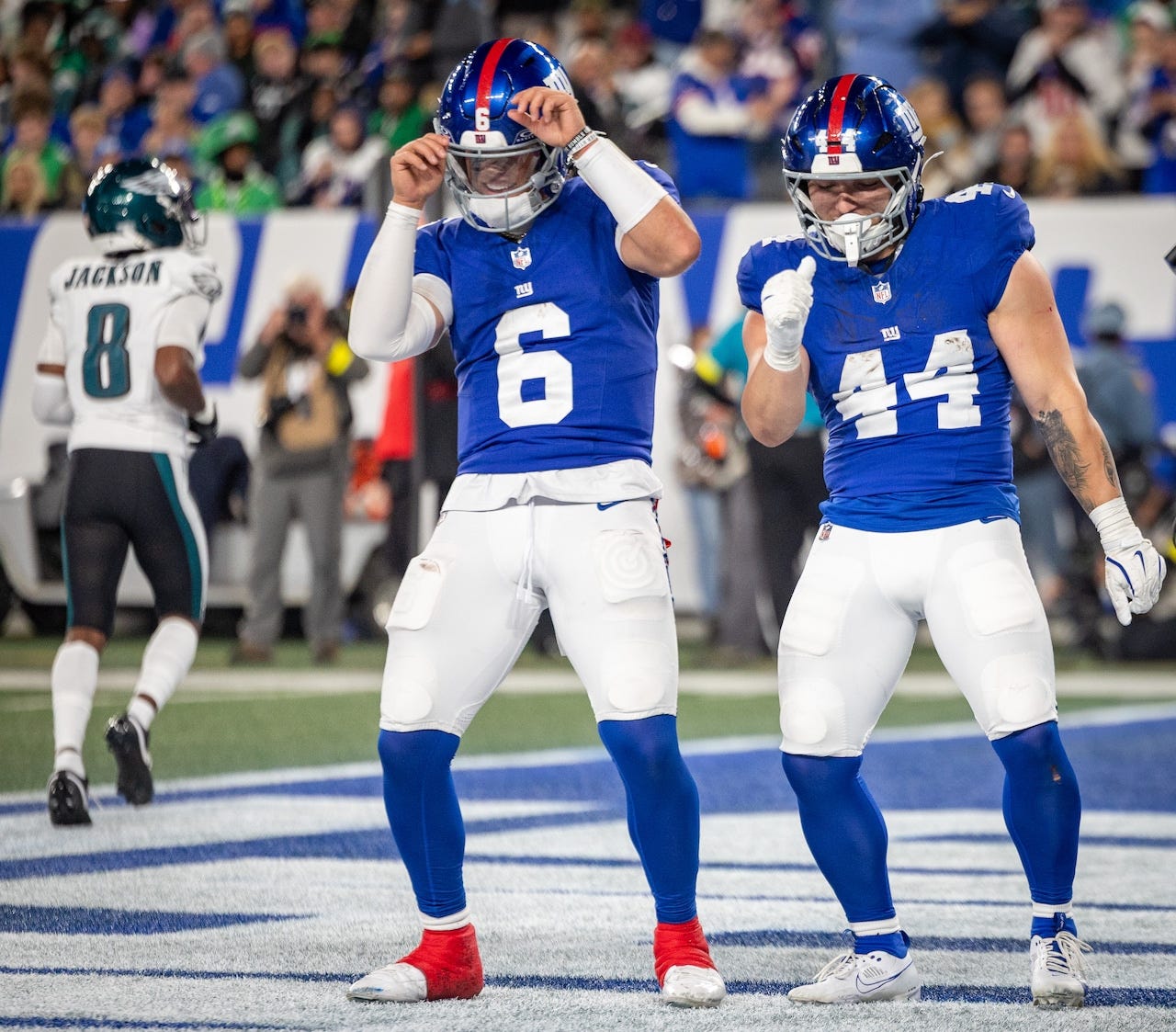
Image 1: RB Cam Skattebo (44) celebrating during a 3 TD game against the Eagles
Even after a 4-13 season that resulted in the firing of Brian Daboll and a top-5 draft pick, the New York Giants have more foundational talent than the typical NFL bottom-feeder. With two franchise OTs, an alpha WR1, and multiple quality EDGE rushers, the Giants have talent at the sport’s most impactful positions. Beyond the top-end established talent, the youth of the Giants flashed promise. Despite both being day three selections, Cam Skattebo emerged as the team’s lead back, and Marcus Mbow provided capable swing OT play. New York’s first two first-round picks, Abdul Carter and Jaxson Dart, flashed upside during their rookie seasons, but they both need to continue developing to justify their draft selection. Dart is a dynamic athlete when extending plays or rushing for yards, but he needs to continue growing as an in-structure pocket passer to be a true franchise QB. Abdul Carter is a good athlete with high-end pass rush refinement at EDGE, but he needs to continue improving his ability to match the play strength of NFL OTs when bending the corner, rushing with power, or defending the run, If the the teams’ young talent continue to develop and the front office acquires solid pieces around the teams’ top-end talent, then the Giants could become a sneaky play-off contender despite the poor showing in 2025.
The 2025 Season: What Went Wrong
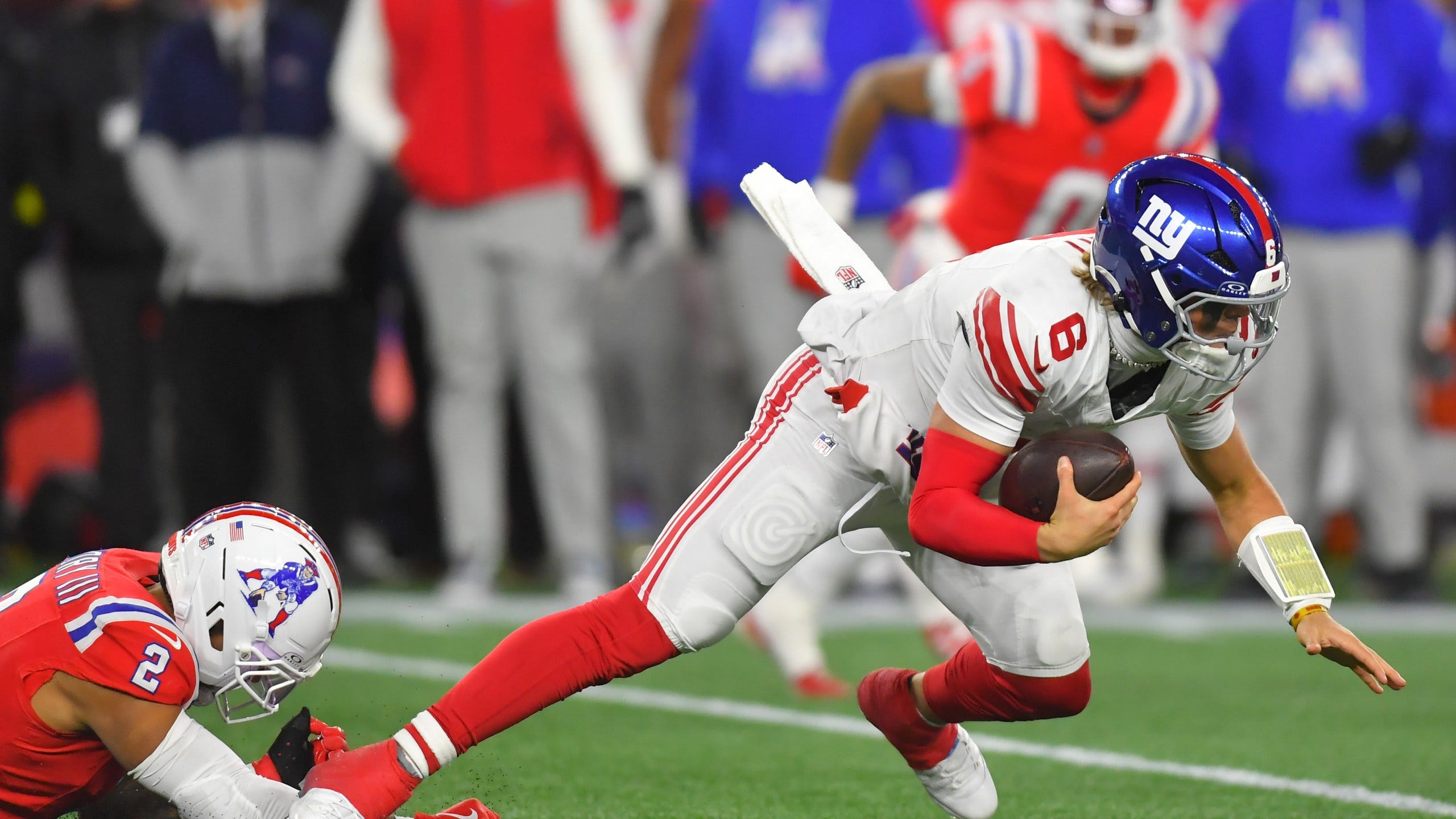
Image 2: QB Jaxson Dart (6) getting sacked during a game againist the Patriots
While the team has bright spots on its roster, the Giants were still a disaster last season. On all units, the Giants suffered major injuries to many key contributors. Notably, Andrew Thomas has continued to have issues with his hamstrings/feet, and Malik Nabers had a season-ending ACL/meniscus tear in his right knee. When he was announced as the team’s starter, Jaxson Dart made a lot of plays for the Giants’ offense at the cost of his own body. With a reckless and scramble-heavy play style, Dart missed two games due to a concussion and visited the blue tent multiple times. While the main stars on defense were healthier, starting LB Micah McFadden suffered an early-season-ending Lisfranc injury. On special teams, Graham Gano’s third season of poor health forced the Giants to play three different FA kickers and continue to have an inconsistent kicking game.
The Giants’ poor 2025 FA class played a major role in their disappointing season. The Giants made two big investments in their secondary by signing Jevon Holland and Paulson Adebo. Both players earned their paydays, but they regressed in their first year with the Giants. Injuries played a role in the regression, but both played poorly even when they were healthy. Beyond the splash signings, the Giants got poor returns on their depth signings. OT James Hudson III and LB Chris Board were both signed to multi-year contracts to be high-end depth. Due to Hudson’s disastrous play on the field and Board’s season-ending injury, both were cut and are no longer on the roster.
The Giants’ run defense was one of the biggest failures any team had in 2025. From an EPA, yard per attempt, and total yards allowed perspective, the Giants defense was horrendous at defending the run. Many will blame coordinators or injuries, but the roster is the main culprit. Across every position in the front seven, the Giants fielded too many poor run defenders. On the IDL, the team lacked DTs who were consistent playing against double teams (this includes the recently traded Dexter Lawrence). At LB, Bobby Okereke’s regression and Micah Fadden’s injury had the team lose all their starting-caliber LBs, and it forced the Giants to rely on depth-level talent for the entire season. At EDGE, the rotation was mainly comprised of smaller 3-4 OLB types who trade off size/strength for speed, but the team still had a good run defenders in Chauncy Gholston. The issue is that Gholston dealt with lingering neck/ankle injuries that caused him to miss time and affected his play. With a very clear Achilles heel, the Giants need to heavily prioritize revamping the run defense, especially as teams are gearing towards running the ball at higher rates and out of heavier personnel.
Offseason Moves
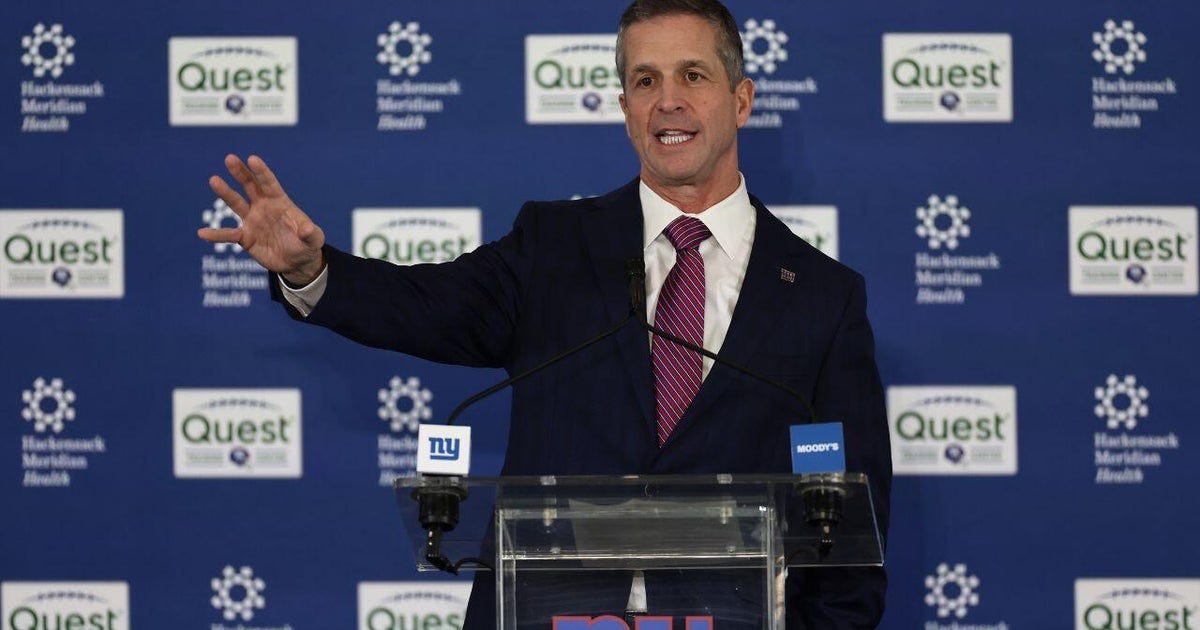
Image 3: HC John Harbaugh at a press conference as the New York Giants’ Head Coach
Trades
DT Dexter Lawrence (NYG) for 1.10 (CIN)
Cuts
WR Da’Quan Felton
WR Courtney Jackson
OT James Hudson III
DT Marlon Tuipulotu
DT Elijah Chatman
LB Bobby Okereke
LB Swayze Bozeman
LB Chris Board
CB T.J Moore
CB Myles Purchase
S Patrick McMorris
S Anthony Johnson
K Graham Gano
P Jamie Gillan
Free Agency Signings
QB Brandon Allen - 1 year - 1.45 m - 250 k guaranteed
FB Pat Ricard - 2 year - 7.63 m - 3.54 m. guaranteed
WR Isaiah Hodgins - 1 year - 1.24 m - 0 guaranteed
WR Calvin Austin - 1 year - 1.5 m - 450 k guaranteed
WR Darnell Mooney - 1 year - 3 m - 3 m guaranteed
WR Ryan Miller - 1 year - 1.075 m - 1.075 m guaranteed
TE Isaiah Likely - 3 year - 40 m - 26 m guaranteed
OT Jermaine Eluemenor - 3 year - 39 m - 25.45 m guaranteed
OG Evan Neal - 1 year - 1.215 m - 0 guaranteed
OG Joshua Ezedu - 1 year - 1.3 m - 410.3 k guaranteed
OG Daniel Faalele - 1 year - 1.4025 m - 687.5 k guaranteed
OG Aaron Stinnie - 1 year - 1.4875 m - 62.5 k guaranteed
OG Lucas Patrick - 1 year - 1.4875 m - 262.5 k guaranteed
DT D.J Reader - 2 year - 12.5 m - 5.25 m guaranteed
DT Leki Fotu - 1 year - 1.129 m - 25 k guaranteed
DT Sam Robets - 1 year - 1.215 m - 0 guaranteed
DT Shelby Harros - 1 year - 3 m - 2.66 m guaranteed
DT Zacch Pickens - 1 year - 1.1145 m - ?
LB Tremaine Edmunds - 3 year - 36 m - 23.7 guaranteed
LB Micah McFadden - 1 year - 3.75 m - 2.9 m guaranteed
LB Zaire Barnes - 1 year - 1.15 m - 250 k guaranteed
LB Cam Jones - 1 year - 1.3 m - 225 k guaranteed
CB Greg Newsome II - 1 year - 8 m - 3 m guaranteed
S Jason Pinnock - 1 year - 1.4025 m - 200 k guaranteed
S Ar’Darius Waashington - 1 year - 3 m - 1.5 m guaranteed
S Elijah Campbell - 1 year - 1.4025 m - 50 k guaranteed
K Jason Sanders - 1 year - 1.425 m - 300 k guaranteed
P Jordan Stout - 3 year - 12.3 m - 7.3 m guaranteed
LS Zach Triner - 1 year - 1.215 m - 0 m guaranteed
Free Agency Losses
TEN - WR Wan’dale Robinson - 3 year - 70 m - 38 m guaranteed
TEN - TE Daniel Bellinger - 3 year - 24 m - 14.01 m guaranteed
NE - OT James Hudson III = 1 year - 1.4025 m - 537.5 k guaranteed
TEN - OC Austin Schlottman - 2 year - 7 m - 2.99 m guaranteed
WAS - DT D.J Donaldson - 1 year - 1.325 m - 20 k guaranteed
TB- DT Rakeeem Nunez-Roches - 1 year - 1.3 m - 300 k guaranteed
TEN - CB Cordale Flott - 3 year - 45 m - 38 m guaranteed
NYJ- S Dane Belton - 1 year - 4 m - 2 m guaranteed
ARI - LS Casey Kreiter - 1 year - 1.4875 m - 1.2625 m guaranteed
Because this article is mainly talking about the draft, I keep the free agency section brief. Overall, the Giants had a strong free agency spending lots of money acquiring players who fit the identity newly hired head coach John Harbaugh wants to establish. Rather than spending on every single signing, I’ll focus on what I view as the Giants’ most impactful signing and loss.
The most impactful free agency signing is TE Isaiah Likely. An alignment-versatile, dynamic pass catcher, Likely is one of the best pure move-TEs in the NFL. Unlike other WR/TE tweeners who struggle to carve out a consistent role on offense, Likely stays on the field as he can align in the slot or as an F-TE. What makes Likely different from these other tweeners is his combination of route running, RAC/YAC, and run-blocking physicality. Even though they paid Likely a lot of money, the Giants are still going to play Theo Johnson a lot of snaps as the in-line TE in 11 personnel since he is a better in-line blocker than Likely. With the team losing their slot WR Wan’Dale Robinson and needing a more dynamic TE to compliment Theo Johnson, Likely essentially kills two birds with one stone.
The most impactful free agency loss is CB Cordale Flott. A full-time starter since his rookie season, Flott has underrated for the majority of his NFL career. Despite the Giants acquiring a first-round pick and a 54m free agent, Flott has been the Giants’ most consistent and available CB. Flott’s departure leaves the CB room in a rough spot as it only consists of veterans coming off down years, a draft bust, and career special teamers. Unless the teams get an immediate star rookie or a career resurgence from one of their veterans, the Giants are likely going to struggle at CB in 2026. Even though Flott got a large deal from TEN, the Giants are not going to get a comp pick, as they spent a large amount of money on free agents.
Team Needs Entering The Draft
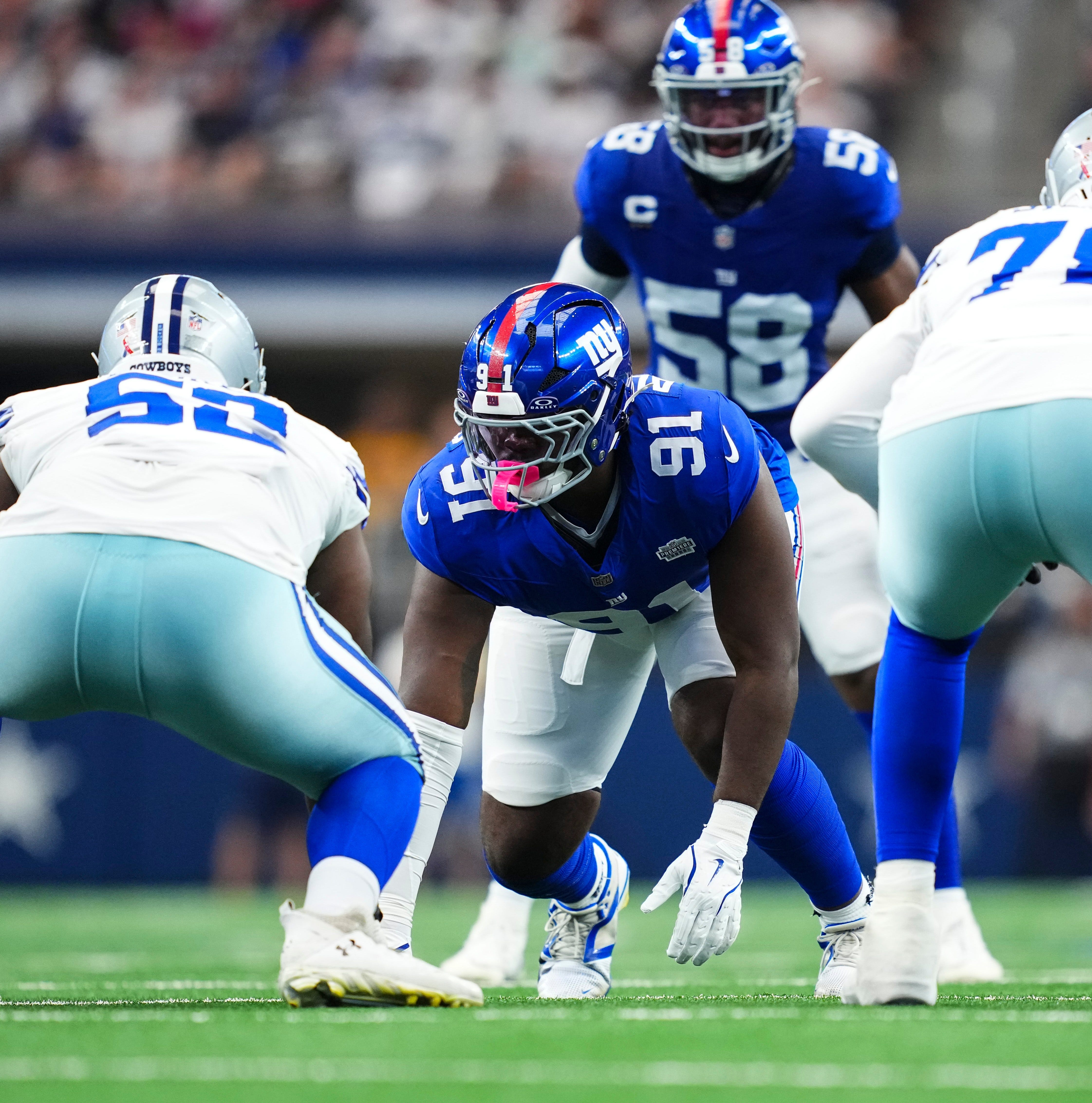
Image 4: DT Darius Alexander (91) aligned as a 3-Technique
After trading a DPOTY caliber player on their IDL, the Giants are in desperate need to fill out their DL with starters. D.J Reader and Shelby Harris are both solid aging veterans who can play a good amount of snaps in 2027, but the Giants need to heavily prioritize adding young DTs who can compete for snaps as rookies. With most of players in DT room still being poor run defenders against doubles, the Giants should specifically target high-end run defenders in this draft class.
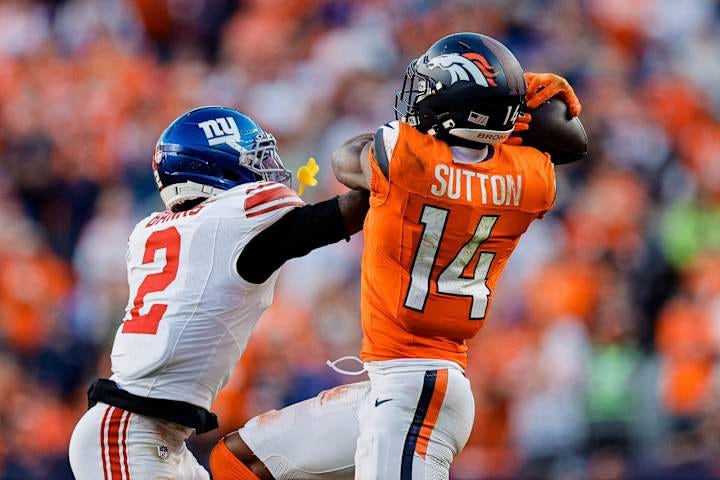
Image 5: CB Deonte Banks (2) giving up a recepetion
While the Greg Newsome II singing provides a solid band-aid starter, it should not stop the Giants from adding a CB in the draft. After declining Banks’ fifth-year option, there is a realistic chance that Newsome II, Adebo, and Banks are all off the team next offseason. This makes CB a simultaneous immediate and long-term priority for the Giants. Even if the rookie does not win a starting job in week one, the Giants adding young, cost-controlled depth would be very valuable, as having a penciled-in starter for 2027 can help stabilize a CB room that could look very different next year. Considering Adebo and Newsome II’s history of missing games, a rookie CB in a depth role will likely still see a healthy amount of starts next season.
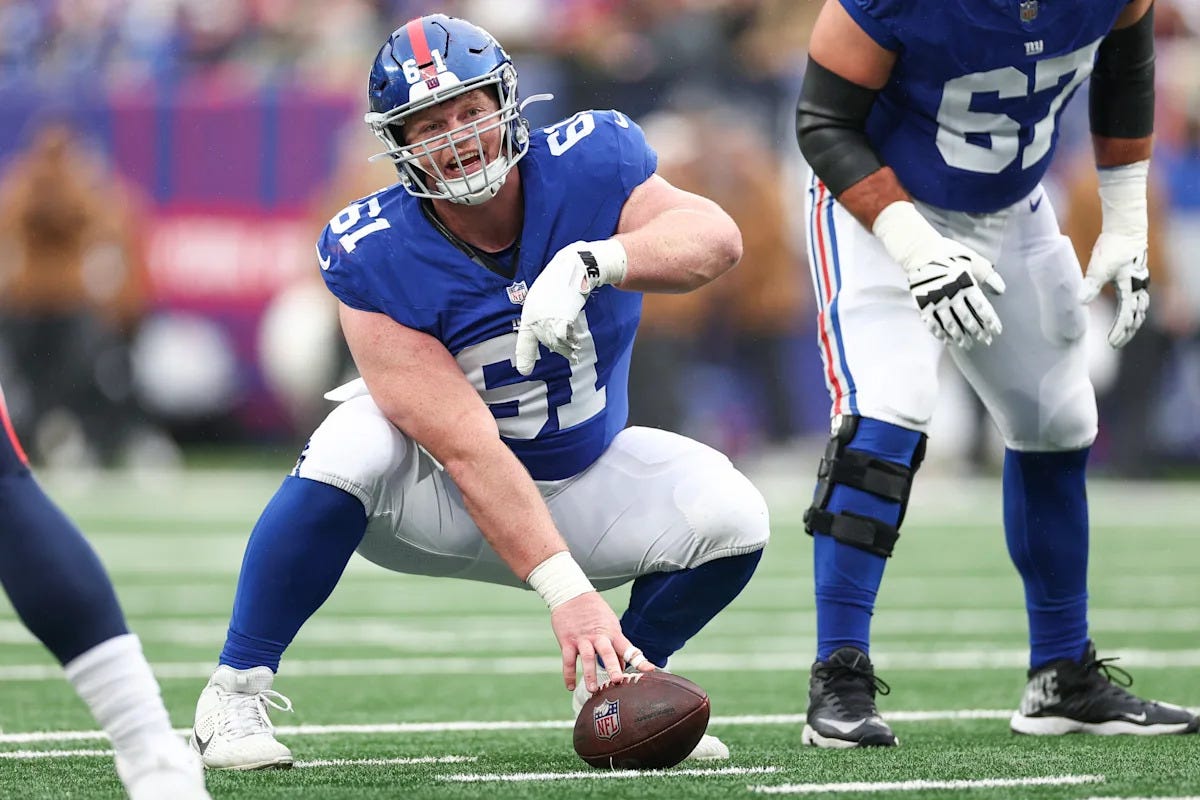
Image 6: OC John Michael Schmitz (61) communicating with the rest of the Giants’ OL
While OT is a strength for the Giants with franchise OTs Andrew Thomas and Jermaine Eluemenor, the Giants’ IOL room is spotty at best. Among returning starters, Jon Runyan has been serviceable but unremarkable, while John Michael Schmitz has been one of the worst OC starters for three consecutive seasons. The team signed several FA OGs, but none of them are starting-caliber options, and their contracts reflect that. With RG being an open competition between players like Evan Neal, Lucas Patrick, and Daniel Faalele, the team needs to prioritize adding a rookie OG to either start or be the eventual replacement at RG. In terms of upgrading OC, the draft is light in immediate starting caliber players, making JMS the likely starter at OC for 2027. If JMS continues to struggle, then the Giants could turn to FA Lucas Patrick, who has starting experience at OC.
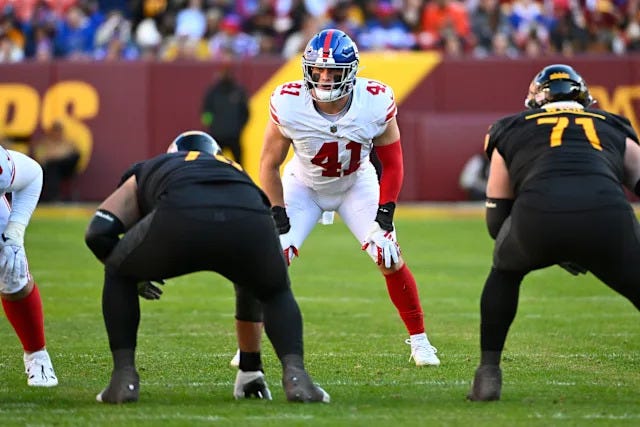
Image 7: LB Micah McFadden pre-snap againist the Commanders
After they cut and replaced Bobby Okereke with Tremaine Edmunds, the Giants have a big question mark for their other starting LB. Micah McFadden would be the shoo-in starter, but he is coming off a season-ending foot injury that could impact his future play. Darius Muasau is another playable option, but neither is good enough to be a starter without looking for upgrades. Given that Wilson’s scheme asks LBs to act as a part of the pass rush on blitzes or disguised fronts, the Giants should target LBs who can contribute as high-end blitzers and beat out McFadden/Muasau.
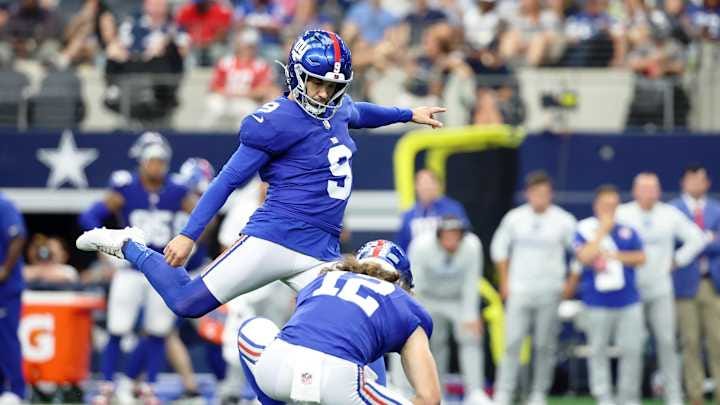
Image 8: Former Giants K Graham Gano and P Jamie Gillan on a field goal
After multiple years of fielding multiple Ks due to poor health, the Giants need to ensure they can have a reliable kicking game next season. Even though Sauls and Sanders are fine enough options, the Giants should still consider targeting one of the many high-end kicking prospects in this class via the draft or FA. The special team uncertainty extends beyond kicking, as veteran long snapper Casey Kreiter did not re-sign. The Giants did sign Zach Triner, who has failed to win a starting job for the past three seasons. Long snapping is rarely a talking point in roster construction, but instability at LS can create problems for the punt and field-goal units. If Triner or a FA/draft pick is not able to provide competent LS play next offseason, then the Giants could have another season of dubious special teams play.
The Draft
I will be using a traditional A-F scale where I am trying to have a C be considered average. My grading scale will be based heavily on the potential impact of the player selected (high-end starter, low-end starter, depth, roster bubble, etc) and the capital used on that player.
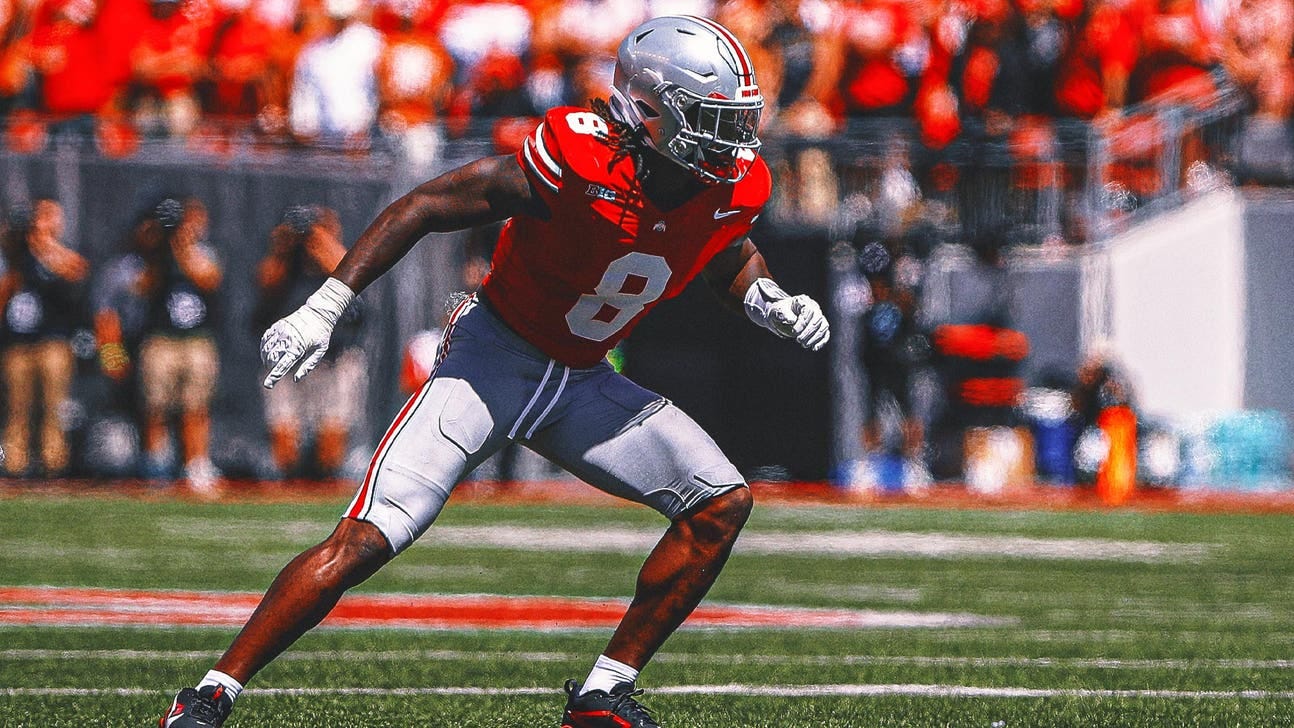
Image 9: LB Arvell Reese (8) on the field for the Ohio State Buckeyes
1.05 - Arvelle Reese - LB - Ohio State - B
Even though I am lower on him than consensus, Reese’s immediate run defense impact and scheme fit make me a fan of the pick. A LB/EDGE hybrid player in college, Reese played all across Ohio State’s front seven. Similar to players like Leo Chenal, Jamie Collins, and Derrick Barnes, Reese played a lot of EDGE on early downs to play contain and set the edge. By being great at locking out blockers, Reese is great at establishing control of his gap and shedding blocks to tackle the ball carrier. Compared to other EDGEs in this draft class, Reese had by far the best run defense tape. Not only is Reese good at defending the run at EDGE, but he is a good run-stuffing LB when aligned traditionally. Reese is an unnotable processor, but he is still a green player whose best football is still ahead of him. If he is able to be more proactive making reads as a LB, then Reese can be a truly special run defender due to his athletic gifts and block-shedding ability.
In true passing situations, Reese’s coverage range, closing speed, and play strength make him a solid spy, blitzer, or coverage player. While other draft analysts believe Reese can become a good pass rusher as an EDGE, I personally do not believe so. Reese is a good straight-line athlete, but he lacks the complete athletic package found in other successful LB to EDGE converts. By having mediocre fluidity and bend, Reese is only able to use his speed to convert speed-to-power since he cannot bend around the corner or counter inside at a high-end NFL level. Reese does have good strength for his size, but he is not strong enough to consistently push pockets and win with power against NFL OTs. Reese could survive as a pure EDGE, but I believe it severely limits his upside as a player due to his limitations.
With the Giants announcing that their usage of Reese will be similar to his usage at Ohio State, I am extremely excited to see Reese on the field. While I believe there were more talented players at 5 (Delane, Downs, and Styles were all higher on my board and all played positions of need), Reese is a perfect scheme fit with Deenard Wilson as an LB, while also being the best run-defending EDGE on the roster. If the coaching staff is able to effectively manage his usage, then Reese’s skillset as an early down run-defending EDGE and passing-down blitz/spy/cover LB can revamp a previously underwhelming Giants defense.
Video 1: LB Arvell Reese (8) fits the run and tackles the RB
Video 2: LB Arvell Reese (8) locks out the climbing OT and makes a play on the RB
Video 3: LB Arvell Reese (8) chases down the WR to prevent him from cutting upfield
Video 4: LB Arvell Reese (8) blows up the RB as a blitzer and pressures the QB
Video 5: LB Arvell Reese (8) uses speed-to-power to get a sack on the QB
Video 6: LB Arvell Reese (8) sets a perfect edge and tackles the RB
Video 7: LB Arvell Reese (8) plays man coverage against the TE
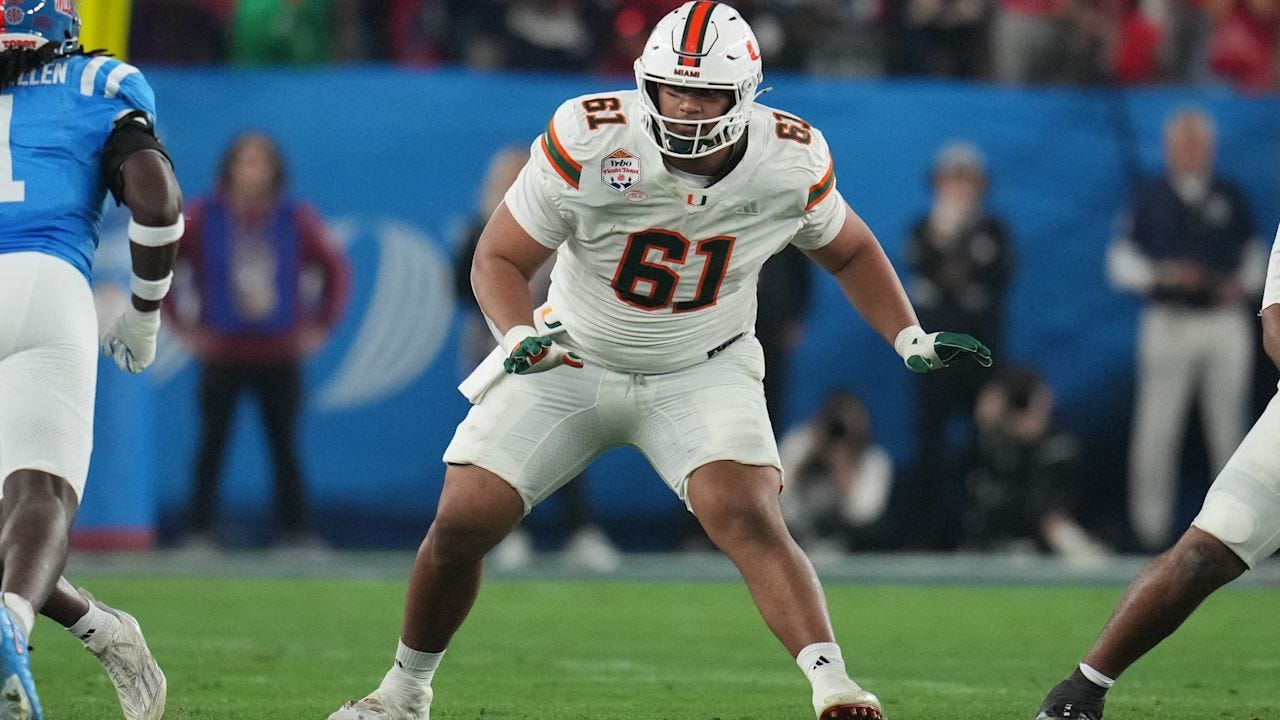
Image 10: OG/OT Francis Mauigoa (61) in pass protection for the Miami Hurricanes
1.10 - Francis Mauigoa - OG/OT - Miami - A
As someone whose favorite position group is OL, Francis Mauigoa at 10 puts a smile on my face due to the year-one impact and long-term upside of the selection. One of the few OL prospects whom I gave a true first-round grade (the only other first round OL prospects I had were Iheanachor, Proctor, and Freeling), Mauigoa is one of the best run blockers in the class due to his athleticism, physicality, and power. As a 330 lb OL, Mauigoa has unsurprising displacement ability in the run game. Unlike many high-end power athletes, Mauigoa is a solid athlete who can reach and climb in the run game at a competent level. For a college OT, Mauigoa showed good technical refinement in pass protection and greatly improved in the latter half of the season. During Miami’s playoff run and late slate, Mauigoa was more consistent reacting to inside counters and being active with his punches.
While many people viewed him as an OT, I graded Mauigoa as an OG. In my opinion, Mauigoa lacks the tools to be a high-end pass protector at OT. In terms of the traits that impact pass protection (these are height, arm length, leg length, and foot quickness), Mauigoa is average-to-mediocre. With short arms and legs, ok foot speed, and average height, Mauigoa’s physical limitations makes me believe he would cap out as a low-end OT starter if forced to player there. By playing OG, Mauigoa simultaneously fills the Giants’ hole at RG and plays the position that gives him the highest upside. Mauigoa’s movement and length traits are mediocre for OT standards, but they are great for OG standards since OGs are generally less athletic than OTs. Beyond mitigate his main physical deficiencies, Mauigoa moving to OG frees him in the run game. With OGs seeing more action driving, pulling, and climbing in the run game, Mauigoa is going to get more opportunities to show off his dominate run blocking ability. In terms of leverage, Mauigoa is going to play more out of a three-point stance which should help his occasional leverage and pad level issues in the run game. While I mentioned my concerns about his cieling at OT, I believe Mauigoa could become a Pro Bowl+ caliber player at OG.
Beyond his on-field impact, Mauigoa helps ensure the consistency of the Giants’ OL due to Andrew Thomas’ injury history. With Thomas consistently missing games every season, the Giants’ need to have a swing OT capable of providing 4-5 starts a season. By having the option kick out Mauigoa, the Giants can ensure they are putting out their best sixth OL on the field. While I believe the best plan B is Mauigoa at OG and Mbow at OT, the versatility added with Mauigoa could be useful in future iterations of the Giants roster. Some view Mauigoa as the successor at RT, but I believe Mauigoa is best sticking at OG long-term. With OGs still being paid large contracts and Mauigoa having a big traits difference when at OT, the Giants do not gain anything from playing Mauigoa at OT instead of drafting/paying a new starter (think about how teams have operated with Joe Thuney, Tyler Smith, or AVT).
Video 8: OT/OG Francis Mauigoa (61) makes a difficult reach block on the DT
Video 9: OT/OG Francis Mauigoa (61) climbs to the second level and blocks the DB
Video 10: OT/OG Francis Mauigoa (61) delivers a firm outside hand strike in pass protection
Video 11: OT/OG Francis Mauigoa (61) drives the defender out of the gap with violence
Video 12: OT/OG Francis Mauigoa (61) uses textbook footwork against the inside counter
Video 13: OT/OG Francis Mauigoa (61) pulls and goes up field looking for work
Video 14: OT/OG Francis Mauigoa (61) failing to cut off the EDGE
Video 15: OT/OG Francis Mauigoa (61) failing to mirror against the inside counter
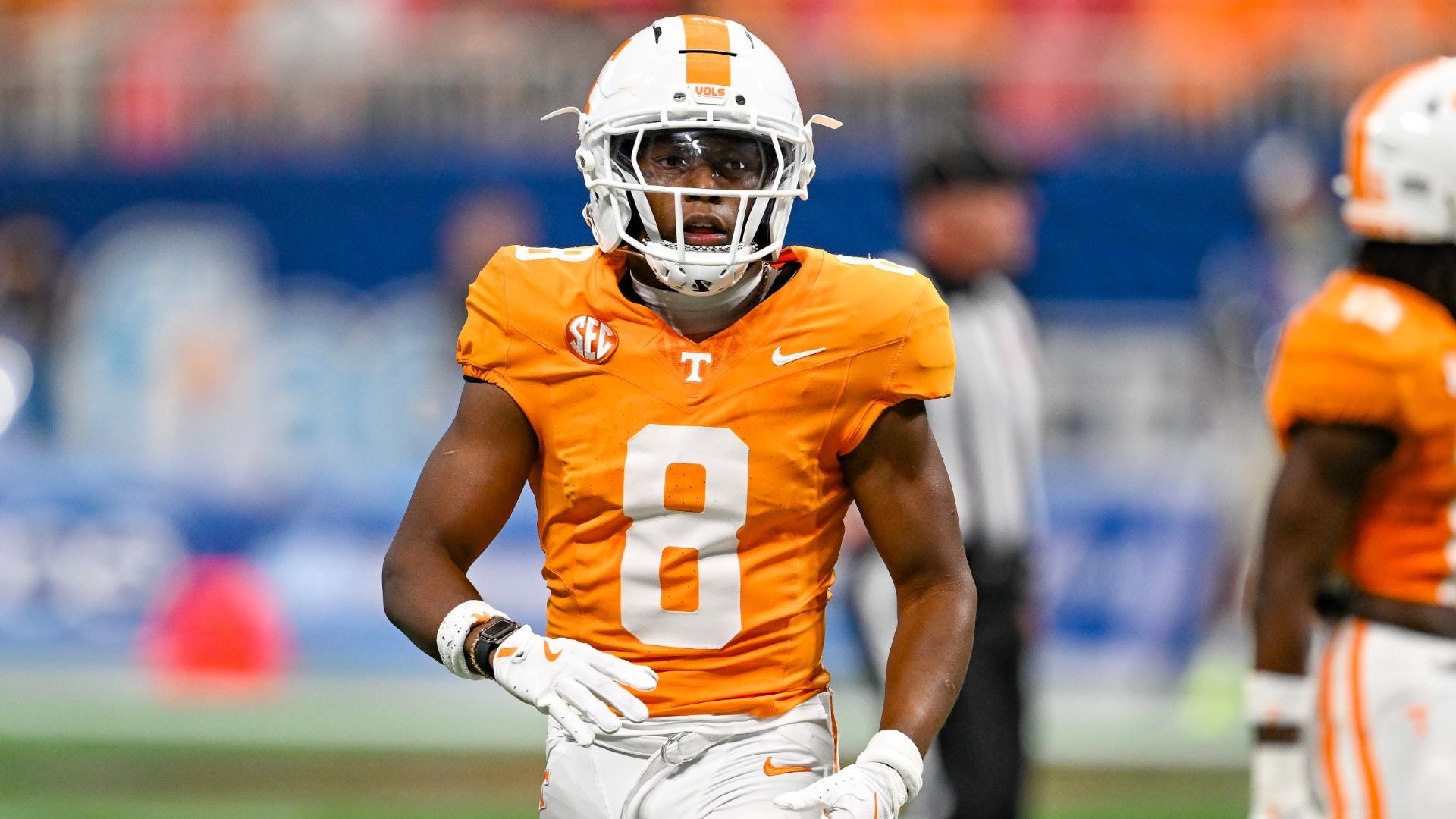
Image 11: CB Colton Hood (8) on the field for the Tennessee Volunteers
2.37 - Colton Hood - CB - Tennessee - B
My opinion of the Colton Hood selection depends heavily on the Giants’ coverage calls next season. Hood was one of the better press-man prospects in this year’s draft class due to his physicality, length, and footwork. Hood is not a great athlete, but he is good enough to remain in phase when transitioning upfield and not get stacked vertically easily. If he learned to use his length to be more disruptive at the catch point, then Hood can be one of the better pure press-man CBs in the NFL. As a run defender, Hood needs to be more consistent with his angles and avoid ankle biting, but he engages physically with blockers and hits hard when he gets a good angle on the ball carrier. If he is able to play less recklessly and wrap up more consistently, then Hood could develop into a good run defender for a CB.
My main concerns for Hood lie in his play in off coverage. Hood has some flashes of instinctive play, but he generally reacts more than he anticipates. Combined with his mediocre burst and first step, Hood will struggle to be a consistent cover player in an off-coverage system as a rookie. By having tighter hips and lacking elite movement, Hood lacks the recovery ability to get back in phase if he misses his initial punch in press or reads routes incorrectly in off-coverage. As a player who best projects in a press-man heavy system, Hood could be a great fit for Deenard Wilson’s defense. While he ran a lot of match coverage and had a low third-down man coverage rate, Wilson has mentioned highly valuing press and wanting to have his DBs aligned tight with WRs. If Wilson does run more press man looks on defense, then Hood is a player who could be a starter as a rookie. Even if he loses out to Banks or Newsome II, Wilson is still likely to rotate in while being the future CB starter for 2028.
Video 16: CB Colton Hood (8) delivers a textbook two-hand punch and breaks up the pass
Video 17: CB Colton Hood (8) stays in phase and lets up a reception by not playing the ball
Video 18: CB Colton Hood (8) reads the out route and breaks up the ball
Video 19: CB Colton Hood (8) blows up the lead blocker and tackles the ball carrier
Video 20: CB Colton Hood (8) delivers a big hit while playing match coverage
Video 21: CB Colton Hood (8) takes a bad angle and lets the WR go upfield for a big gain
Video 22: CB Colton Hood (8) lacks the hips and first step to get in phase
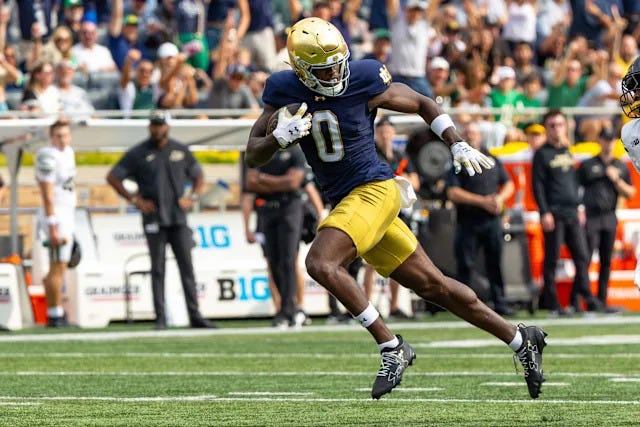
Image 12: WR Malachi Fields (0) making a play with the ball in his hands for Notre Dame
3.74 - Malachi Fields - WR - Notre Dame - F
While I hate being lower on a former Cavalier, I am not a fan of Malachi Fields in the third round. In terms of his strengths, Fields’ game revolves around two things: size and length. By being an extremely strong and densely built WR, Fields is a dominant skill position blocker who easily seals off DBs on the outside of runs and in the second level. Standing at 6’4 with a 6’7 wingspan, Fields has an incredible ability to high point the ball and come down with contested catches in traffic. Along with his size, Fields has soft hands and acrobatic body control that ensure he always has a chance to come down with the ball. For a big WR who has been labeled a poor route runner, Fields is surprisingly effective getting in and out of his breaks. With good deceleration and flexible hips, Fields has impressive reps running hitches and digs for a player with a traditional X-WR body type.
Fields does bring a skillset lacking in the Giants’ WR room, but I do not believe he has the athletic tools to be a good enough separator to be a starting WR. Fields does have some build-up speed, but he has horrible acceleration and mediocre fluidity. Even if he uses his size and length to get off the LOS, Fields lacks the athletic tools to consistently generate space against NFL DBs. As a RAC/YAC player, Fields can break tackles due to his size, but he is not dynamic creating yards by himself. For a player I believe profiles as depth, Fields does not have the special teams background of players you would want in a depth role (he has only played notable snaps on kickoff). Fields does have the size and physicality to be a core special teams player, but he will need to learn special teams play from scratch.
I do believe Fields will have a long NFL career, but his role as a big-bodied WR4/5 is one we see filled by late-round picks/cheap FAs (Ex. Josh Cameron, C.J. Daniels, and C.J. Williams all provide a similar role while being late-day-three selections). Considering the hole at WR2 on the roster, the Giants’ passing on multiple higher upside developmental WR options (mainly Hurst, Brazzell, and Lance) for Fields is poor process in my opinion. Even if I had to pick a WR that projects as career depth in the third, I would much rather have taken Kaden Wetjen who is a more talented returner than anyone on the Giants’ roster and could be an All-Pro as a rookie. I hope I am wrong about Fields’ evaluation and career as a Giant, but I currently believe this is a blunder in an overall solid draft class.
Video 23: WR Malachi Fields (0) makes a difficult high-point catch in traffic
Video 24: WR Malachi Fields (0) fails to get separation and makes an acrobatic catch
Video 25: WR Malachi Fields (0) building up speed to stretch the field vertically
Video 26: WR Malachi Fields (0) quickly decelerates when square cutting into a dog
Video 27: WR Malachi Fields (0) runs a textbook hitch route to get open
Video 28: WR Malachi Fields (0) runs off the DB and drives him out of the play
Video 29: WR Malachi Fields (0) bulldozes a DB in the second level
Video 30: WR Malachi Fields (0) catches a ball in open space and generates minimal RAC
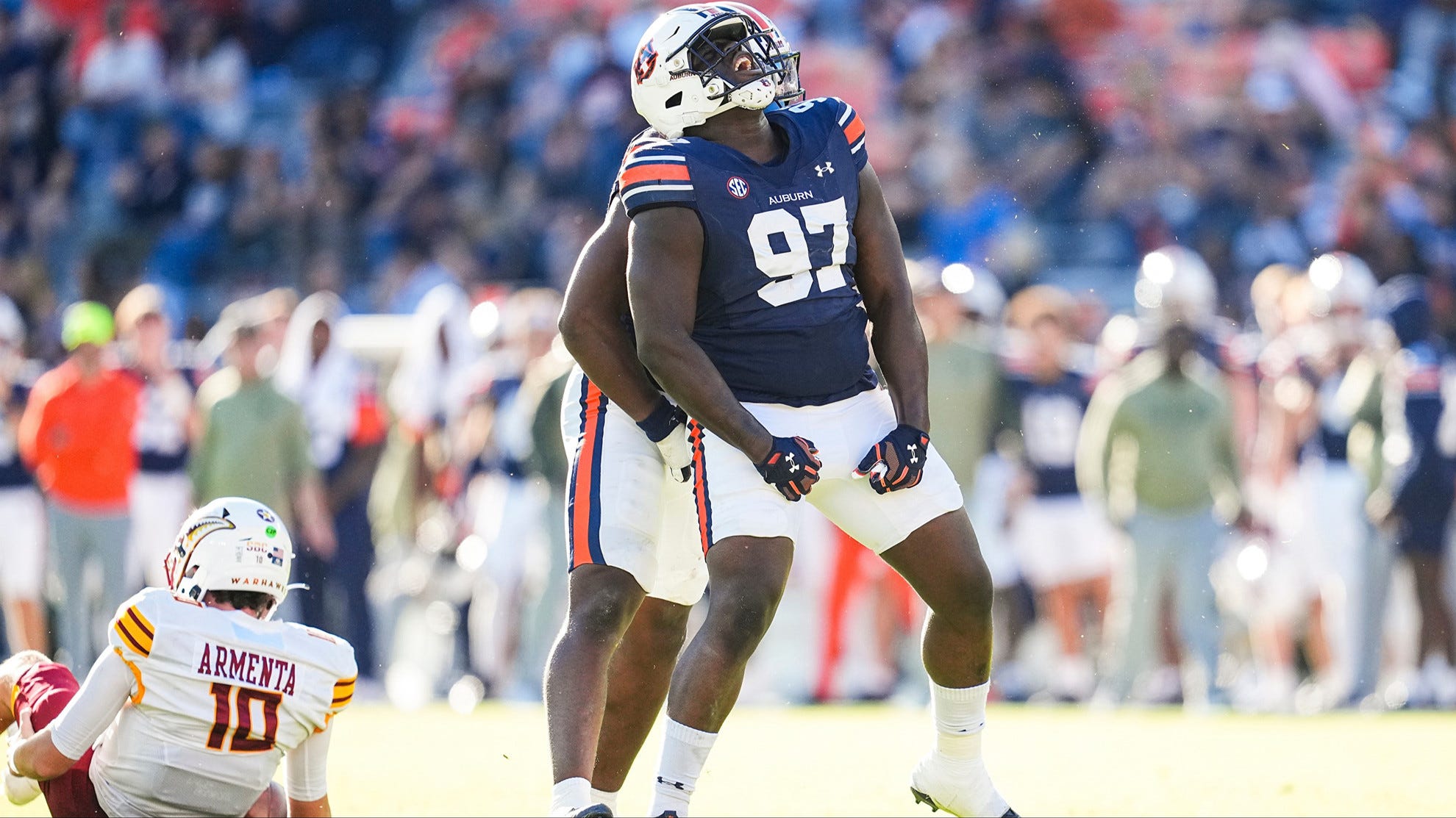
Image 13: DT Bobby Jamison-Travis (97) celebrating on the field for the Auburn Tigers
6.186 - Bobby Jamison-Travis - DT - Auburn - A
Even though he did not have much draft hype, Bobby Jamison-Travis is one of the better NT prospects in this class and a steal in the sixth round. A huge, lengthy player, Jamison-Travis’ tools and refined technique make him one of the best immediate run defenders in this draft class. When facing one-on-one blocks, Jamison-Travis does a good job of using his long arms to torque out the opposing OL to execute textbook peak-and-shed technique. For a NT who is not an exceptional athlete, Jamison-Travis has a lot of reps where he penetrates the backfield and makes plays. When facing doubles/combos, Jamison-Travis does a good job of getting low in his stance to anchor down and not give up ground. Jamison-Travis is also a fluid lateral athlete, which makes him a useful player on stunts. While he is never going to be a good one-on-one winner (like the vast majority of NTs) and needs to play lower when pushing the pocket, Jamison-Travis’ lateral athleticism gives him more ability as a complementary pass rusher than most space-eating NTs.
Even though he was a late-day three selection, Jamison-Travis is a lot more talented than the majority of the DTs on the Giants roster and players taken above him in the draft. For a Giants IDL that needs to improve its run defense, Jamison-Travis immediately helps address the issue and should be a heavy rotation player as a rookie. In base fronts, I would have Jamison-Travis play as the NT with two of Reeder/Robertson-Harris/Alexander/Harris playing over the OGs. I do not want to get carried away projecting the career of a 25-year-old 6th rounder, but I would not be shocked if BJT ends up as the heir to D.J Reader as the Giants’ NT. Given how impactful he could be and the minimal draft capital used to acquire him, the Jamison-Travis draft selection is my personal favorite draft pick from the Giants’ draft class.
Video 31: DT Bobby Jamison-Travis (97) plays low and anchors againist a double team
Video 32: DT Bobby Jamison-Travis (97) anchors against a double team and makes a tackle
Video 33: DT Bobby Jamison-Travis (97) locks out and sheds the block to make a tackle
Video 34: DT Bobby Jamison-Travis (97) locks out the OC and assists on the tackle
Video 35: DT Bobby Jamison-Travis (97) plays through the block to make the tackle
Video 36: DT Bobby Jamison-Travis (97) penetrates on the broken play for the TFL
Video 37: DT Bobby Jamison-Travis (97) slants and attempts to batt down the ball
Video 38: DT Bobby Jamison-Travis (97) explodes laterally to free up the blitzer
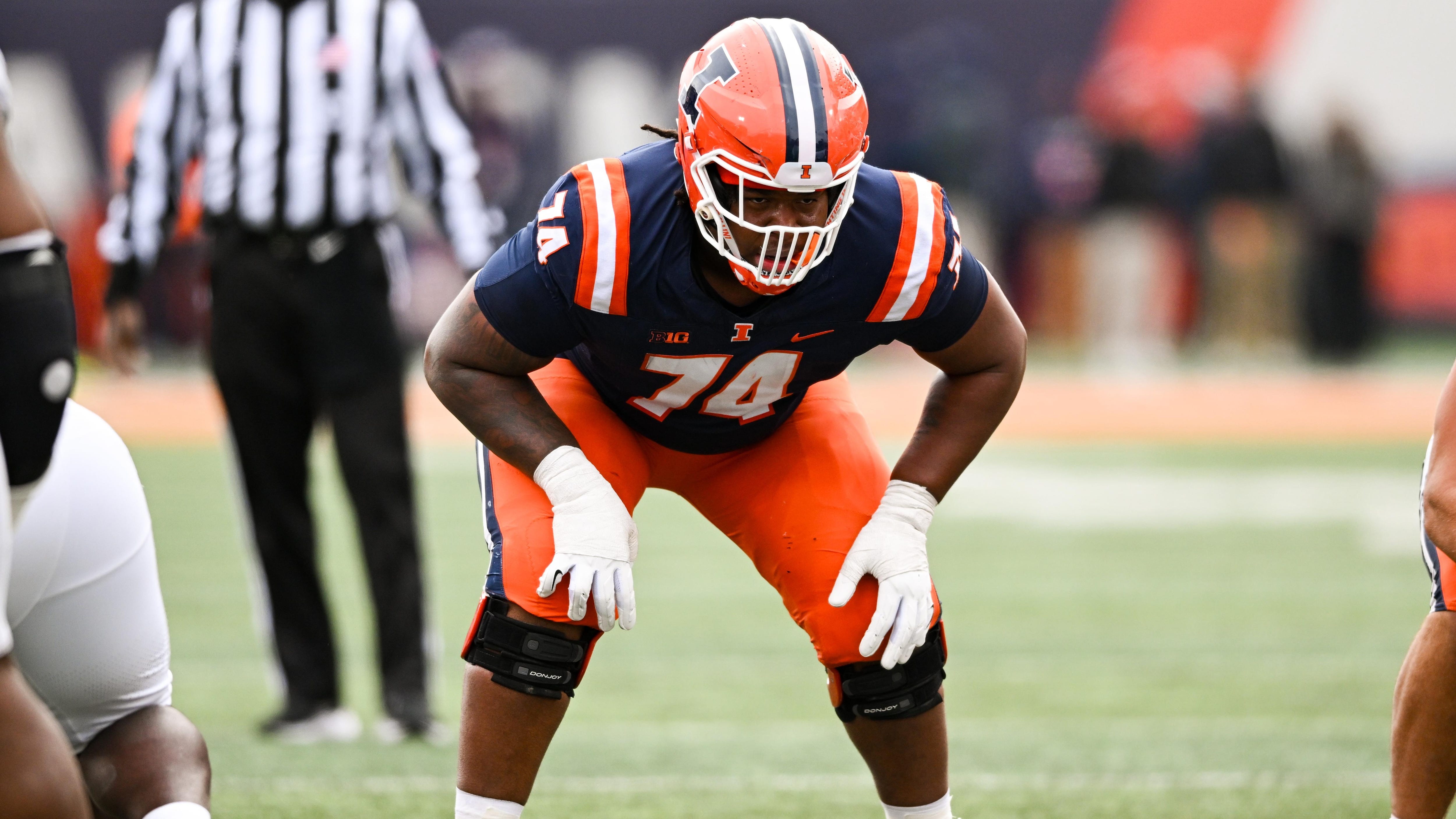
Image 14: OG/OT J.C. Davis (74) on the field for the Fighting Illini
6.192 - J.C Davis - OG/OT - Illinois - B
A position-versatile OL with good strength, size, and length, J.C Davis brings a solid young depth OL for a team whose IOL depth is filled with aging veterans. Davis is your typical power OL who provides value from having the size to anchor against NFL power and the strength to displace defenders in the run game. As a pass protector, Davis shows flashes of savviness with various hand games in his arsenal to win reps against more talented athletes at EDGE. Whether he is punishing a defender’s leverage with a snatch trap or faking out moves with a false punch, Davis has good refinement, even if he still has work to do on his strike accuracy. Beyond his hand games, Davis shows a lot of consistency passing off stunts. Even if he is asked to see the field as a rookie, Davis is refined enough to avoid many typical rookie mistakes.
Davis’ main issue as a prospect is that he is too unathletic to be a starter-caliber player at OT or OG. With poor speed, acceleration, and foot quickness, Davis struggles to consistently get depth when setting vertically in pass protection. Davis could be a playable swing OT if given enough help (make sure he is on the slide side, giving him TE/RB chip help, etc), but he is best suited sliding inside to OG. Even when bumping inside to OG, Davis still has limited ability to mirror or recover in pass protection, and he will struggle to reach, pull, or climb in the run game. Davis may lack the talent to project as a starting-caliber player, but he can provide multiple years of cheap depth OL play to be a young replacement for players like Aaron Stinnie.
Video 30: OT/OG J.C. Davis (97) displaces the EDGE with a two-hand punch
Video 31: OT/OG J.C. Davis (97) gets good leverage and displaces EDGE
Video 32: OT/OG J.C. Davis (97) uses his length to seal the C-Gap to open up the hole
Video 33: OT/OG J.C. Davis (97) executes textbook pick up of a E-T stunt
Video 34: OT/OG J.C. Davis (97) uses flash technique while getting depth in pass protection
Video 35: OT/OG J.C. Davis (97) uses a snatch trap to punish the EDGE for playing too high
Video 36: OT/OG J.C. Davis (97) lumbers in space while pulling in the run game
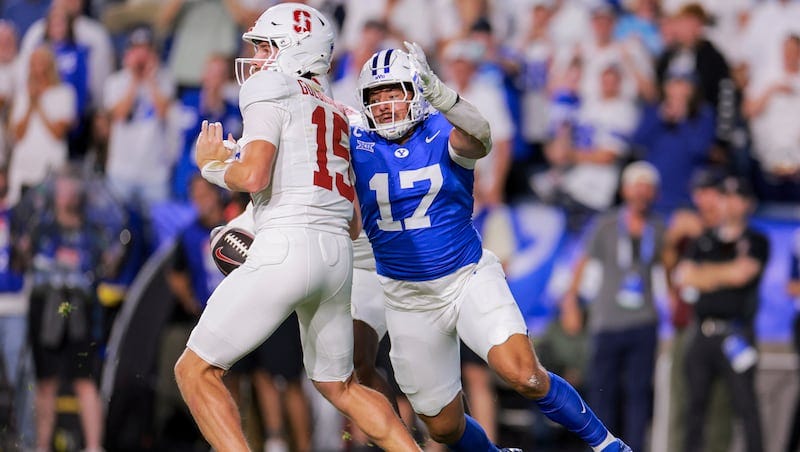
Image 15: LB Jack Kelly (17) sacking the QB for the BYU Cougars
6.193 - Jack Kelly - LB - BYU - B
A big, physical, and fast LB, Jack Kelly is a solid HWS prospect that is both a scheme fit and an immediate special teams contributor. With genuine sideline-to-sideline speed, Kelly flies across the field when fitting the run or chasing down ball carriers. Due to his size, speed, and physicality, Kelly is one of the best pure blitzers in this year’s LB class. Beyond being an extension of the pass rush, Kelly’s speed lets him have good flashes covering TEs/RBs or spying athletic QBs. With Wilson being aggressive in his blitz design and wanting to disguise rushes, Kelly gives another good blitzing and QB spy option to use if Reese is playing near the LOS as an EDGE.
Kelly seems like an awesome player, but there is a reason why he was a sixth-round pick. Outside of size, speed, and blitzing, Kelly is inconsistent and mediocre at the other aspects of being a LB. Even though he is fast, Kelly is a clumsy athlete when getting depth or changing directions. Whether he is fitting the run or dropping into coverage, Kelly has a bad habit of losing his footing and struggles to change directions. Combined with inconsistent striking of blocks and tackling, Kelly has a lot of issues he needs to work on before he can see the field on defense. If he is able to develop more consistency fitting the run and striking blocks, then Kelly does have the upside to develop into a playable starter due to his physical tools. While he needs to work on his ability to wrap up, Kelly’s willingness to blow up blockers and coverage will make him a core special teams player for the Giants. Even if he never develops into a legitimate starting option at LB, Kelly developing just being a physical, rangy special teams piece is a great return for a late day three draft selection.
Video 37: LB Jack Kelly (17) covers the RB running the flat in man
Video 38: LB Jack Kelly (17) covers the RB running the flat in man
Video 39: LB Jack Kelly (17) covers the RB on an option route and generates a PBU
Video 40: LB Jack Kelly (17) penetrating as the looper on a three-man stunt
Video 41: LB Jack Kelly (17) penetrates the backfield as a blitzer
Video 42: LB Jack Kelly (17) locks out and shed the OT then misses the tackle on the RB
Video 43: LB Jack Kelly (17) engages with the block too high and gets driven out of the play
Video 44: LB Jack Kelly (17) attempts to trigger down field and loses his footing
Video 45: LB Jack Kelly (17) attempts to change directions and loses his footing
UDFA & Minicamp Invites
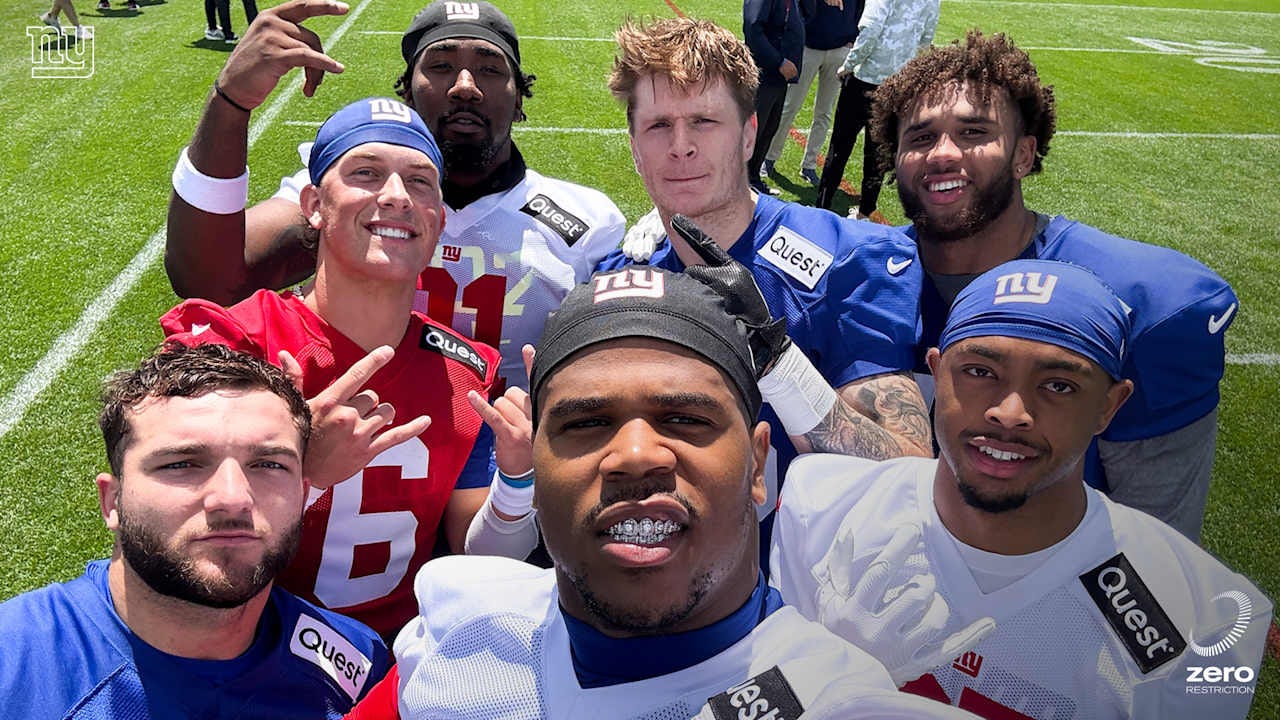
Image 16: The New York Giants’ 2025 draft class at Rookie Mini Camp
UDFA Singings
RB/KR Damon Bankston - New Mexico
TE Johncarlos Miller II - Texas Tech
OT Ryan Schernecke - Kutztown
OT Dodji Dahoue - Eastern Michigan
DT Anquin Barnes - Colorado
DT Ben Barton - Wisconsin
CB/S Thaddeus Dixon - UNC
K Dominic Zvada - Michigan
LS Ben Mann - Boston College
Rookie Minicamp Invites
QB Evan Simon - Temple
QB Jeff Simms - ASU
RB Miles Davis - Utah State
RB Kevorian Barnes - Texas Christian
WR Keegan Johnson - New Mexico
OC Josh Kreutz - Illinois
DT Grant Finley - Missouri
DT Felix Lepper - Germany
EDGE Terrell Tilmon - Texas Tech
EDGE Malin White - Cornell
LB Jhalyn Shuler - South Florida
CB DJ Graham - Kansaas
CB Shawn Collins - Emory & Henry
S Austin Jordan - TCU
S Angle King - Weber State
P James Ferguson-Reynolds - Oregon
With the majority of these signing likely never having long careers in the NFL, I will be keeping this section fairly brief. In terms of players that I believe could make the 53-man roster, Damon Bankston, Ban Mann, and Dominic Zvada have the best odds amongst this group. Bankston is an explosive return man who could make the team by winning the RB3 spot or forcing the team to carry 4 RBs. His lack of size limits his ability to play on third downs and be an effective ball carrier, but the new return rules make Bankston a lock to at least make the practice squad. Zvada and Mann are both extremely toolsy special teams prospects who could push out the Giants’ signed established veterans. Zvada has a massive leg, but had a poor senior season that had him lose his footing as the preseason top kicker prospect. If he is able to showcase improved consistency, then Zvada should easily win the starting kicker job. Mann is a very athletic LS who likely wins the starting LS job over Zach Triner if he proves to be reliable in delivering accurate snaps. Other players to look for would be OT Dodji Dahou and DT Felix Lepper as both are foreign-born players competing for the Giants’ IPP practice squad spot.
Projected 53-Man Roster
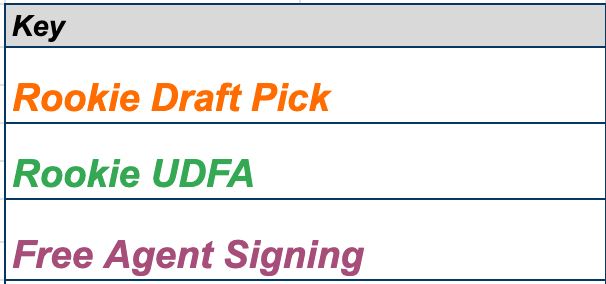
Image 17: Color coding for the depth chart
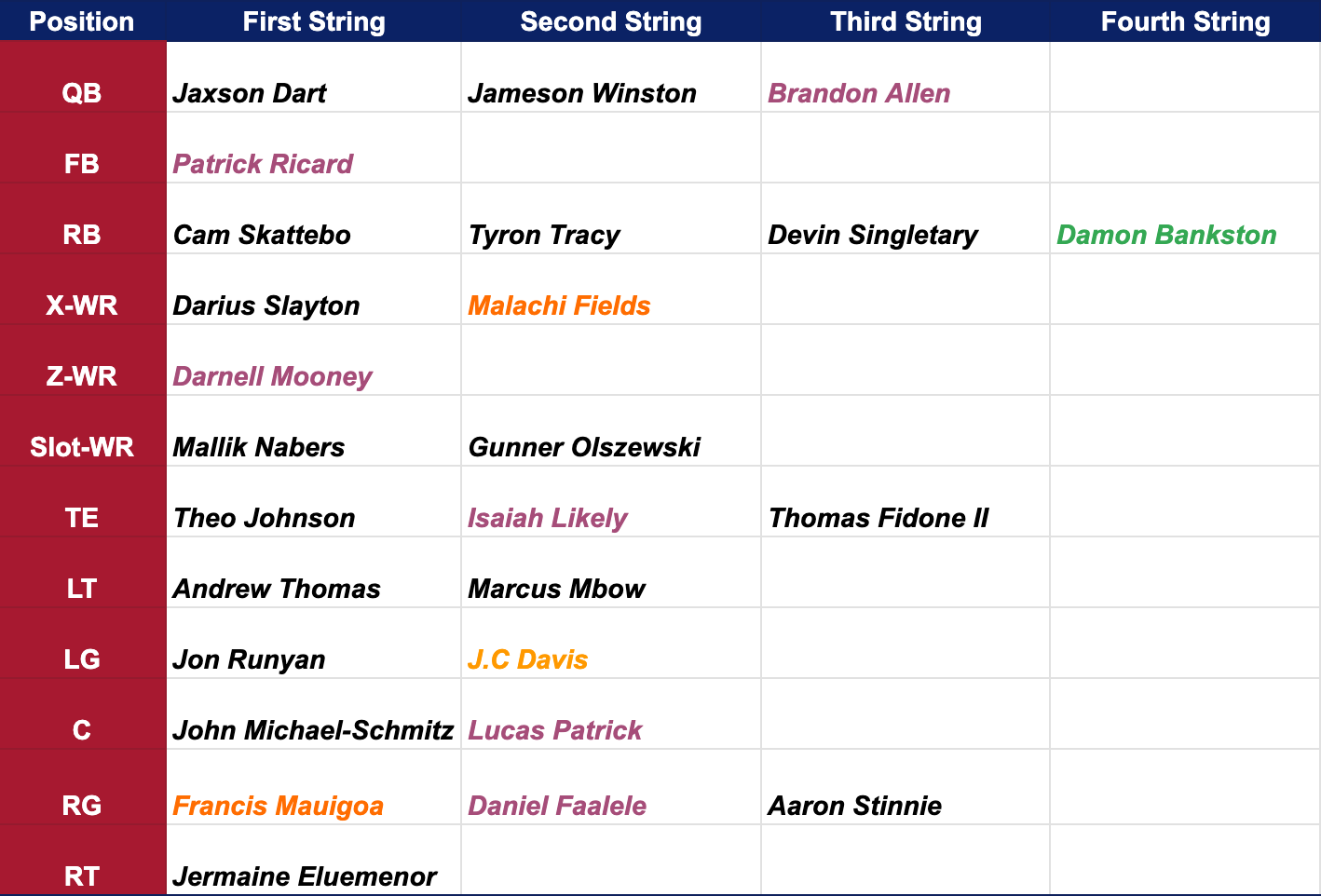
Image 18: Jared Zhang’s New York Giants 2026 Offensive Depth Chart
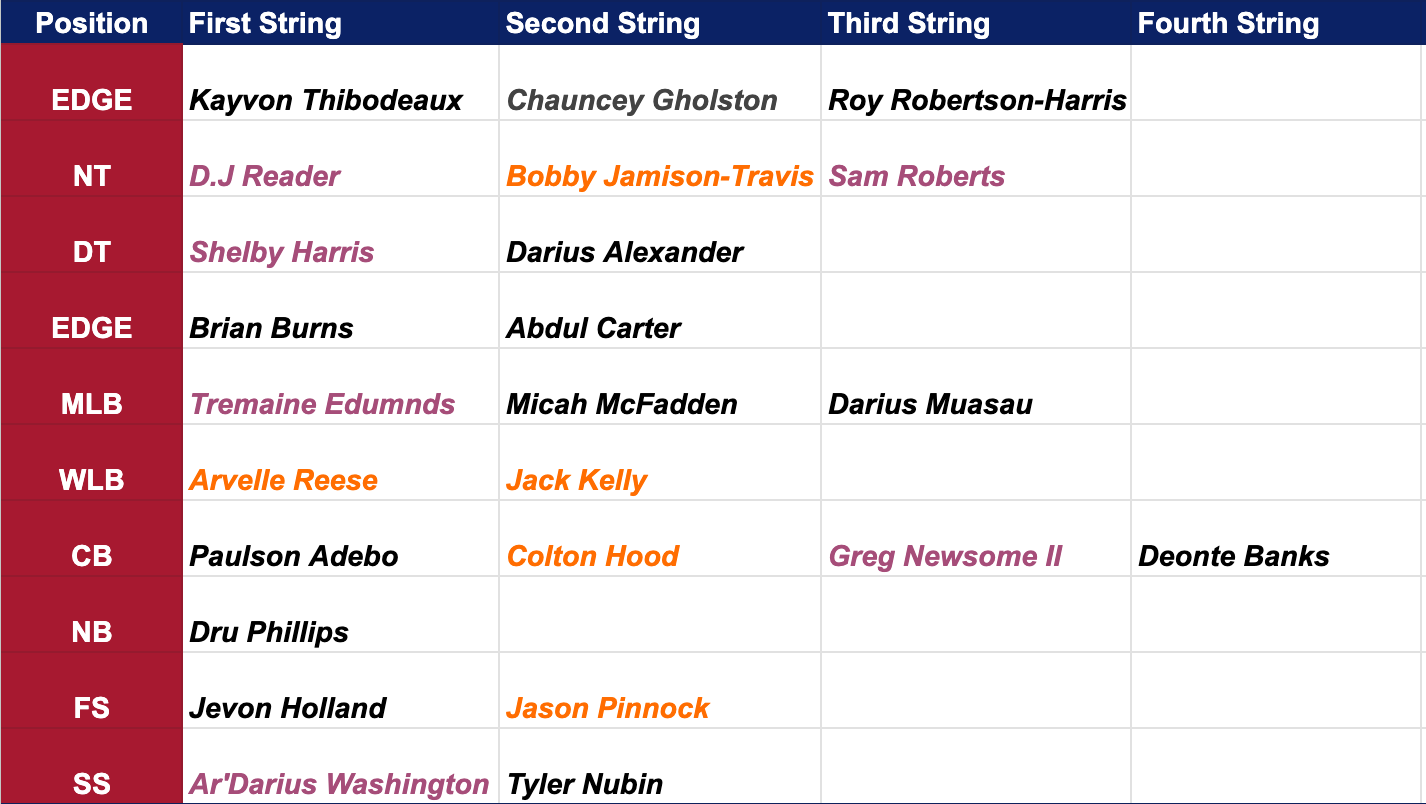
Image 19: Jared Zhang’s New York Giants 2026 Defensive Depth Chart
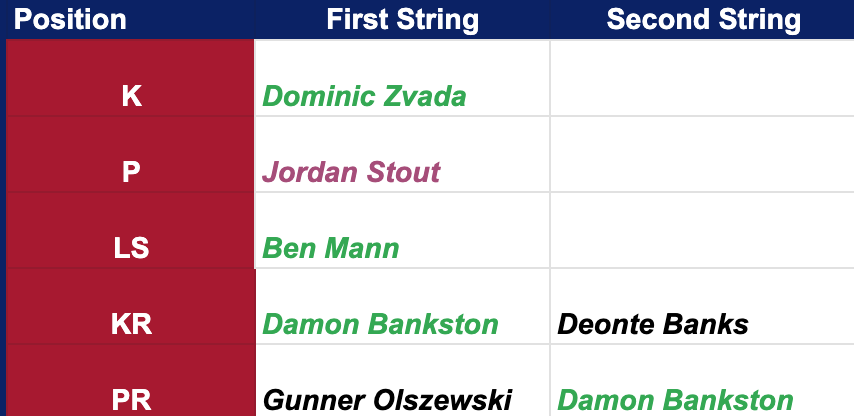
Image 20: Jared Zhang’s New York Giants 2026 Special Teams Depth Chart
While I realize my 53-man roster will be extremely different than the real 53-man roster, I would like to explain my rationale behind my decisions. On offense, I decided to only keep 5 WRs in favor of an extra RB to give an extra dynamic return body on special teams. The OL depth chart looks odd, but I intend for the immediate backup plan for Thomas to be Mbow at LT. If the team were to lose both OTs, then I would kick out Mauigoa to RT and play Faalele at RG. If the Giants OL experiences more injuries past that, then I am wrapping Dart in bubble wrap and praying.
On defense, I moved Roy Robertson-Harris to EDGE to play the hybrid EDGE/IDL role he played in Seattle. While there is overlap between him and Gholston, I wanted to ensure the team had as many good run defenders as possible. At DB, the main NB will still be Dru Phillips with Washington and Newsome II acting as sub-package pieces/backups. On early downs, I imagine the defensive line would be Gholston/Roberton Harris - Reader - BJT - Harris - Reese with McFadden and Edmunds at LB. On passing downs, I imagine we see a lot more three EDGE packages with Carter being asked to rush over OGs and Reese at LB.
Final Thoughts
Overall, I am a big fan of the draft for the New York Giants. Outside of a singular day two selection, I was a fan of every single pick the front office made. With the large majority of the draft picks being on defense, the Giants have established a clear identity under HC John Harbaugh and DC Dennard Wilson by prioritizing athletes who are willing to play hard-nosed football. Depending on how veterans like Washington and Adebo bounce back from injury/regression, the Giants’ defense could be a significantly better unit next season. For the offense, it heavily depends on Nabers returning to form post-ACL injury and how Dart progresses as a passer.
If you enjoyed my content/breakdown, then consider subscribing to my Substack to see more of my content! While my typical posts differ from articles like this, I do post detailed scouting reports on draft prospects with embedded video clips, draft grades, and pro comparisons. All my content is free, but if you wish to pay for a subscription, you will be able to commission reports once every month of subscription on any draft eligible draft prospect.